
Last updated November 15, 2026
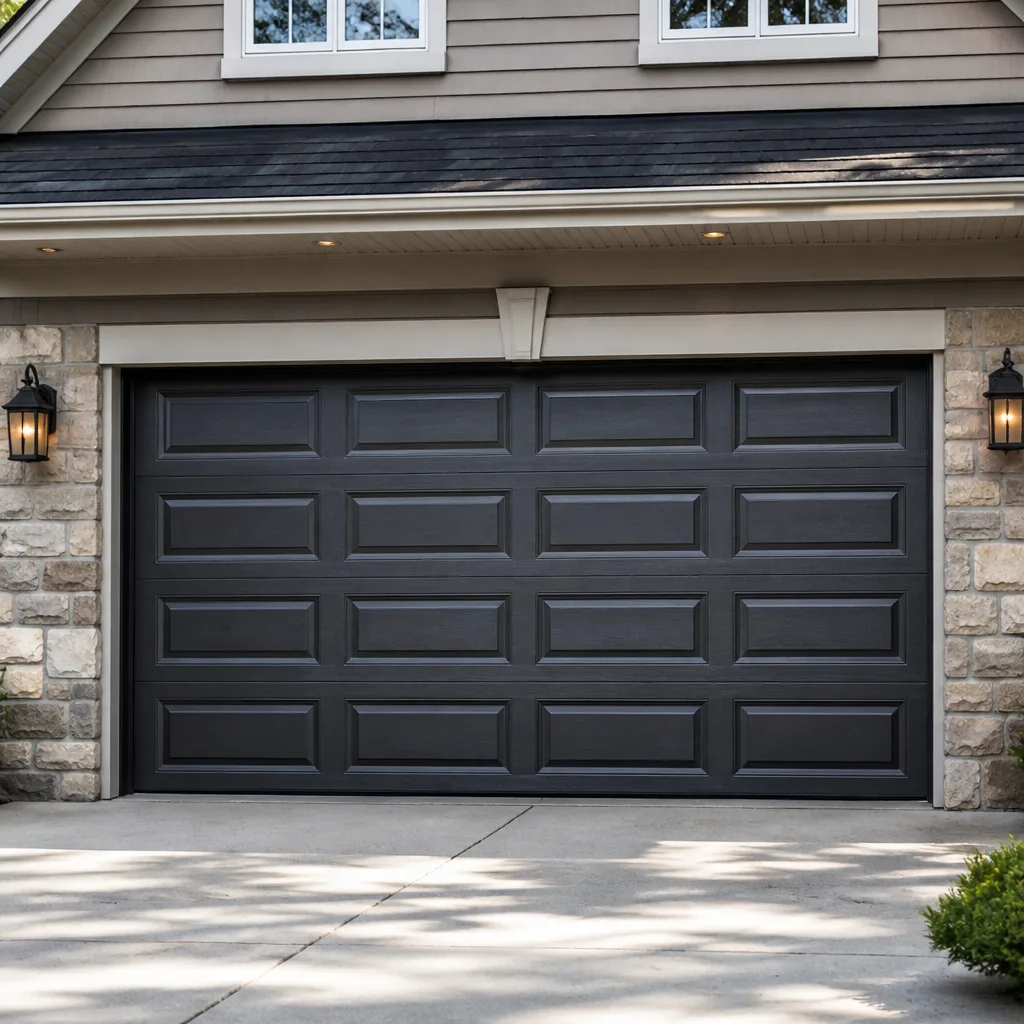 Raised-panel steel
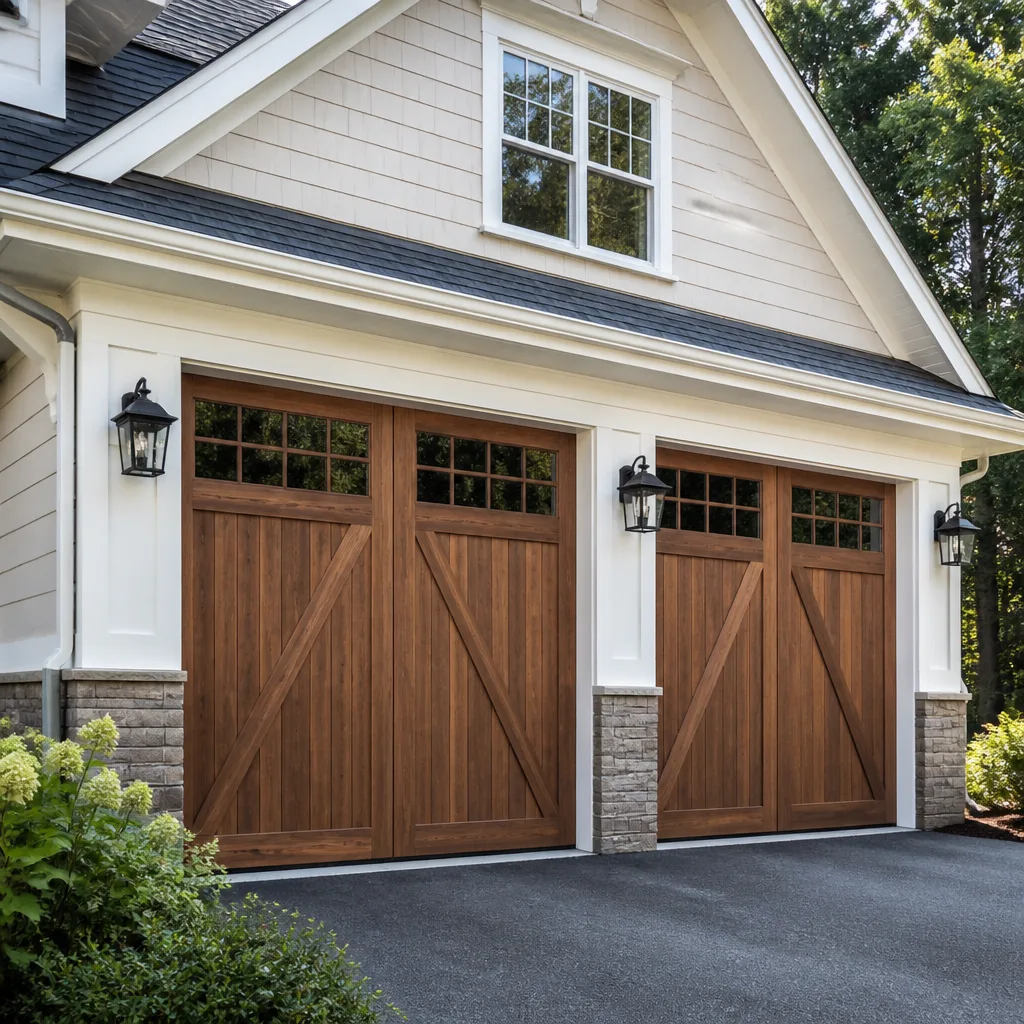 Carriage house
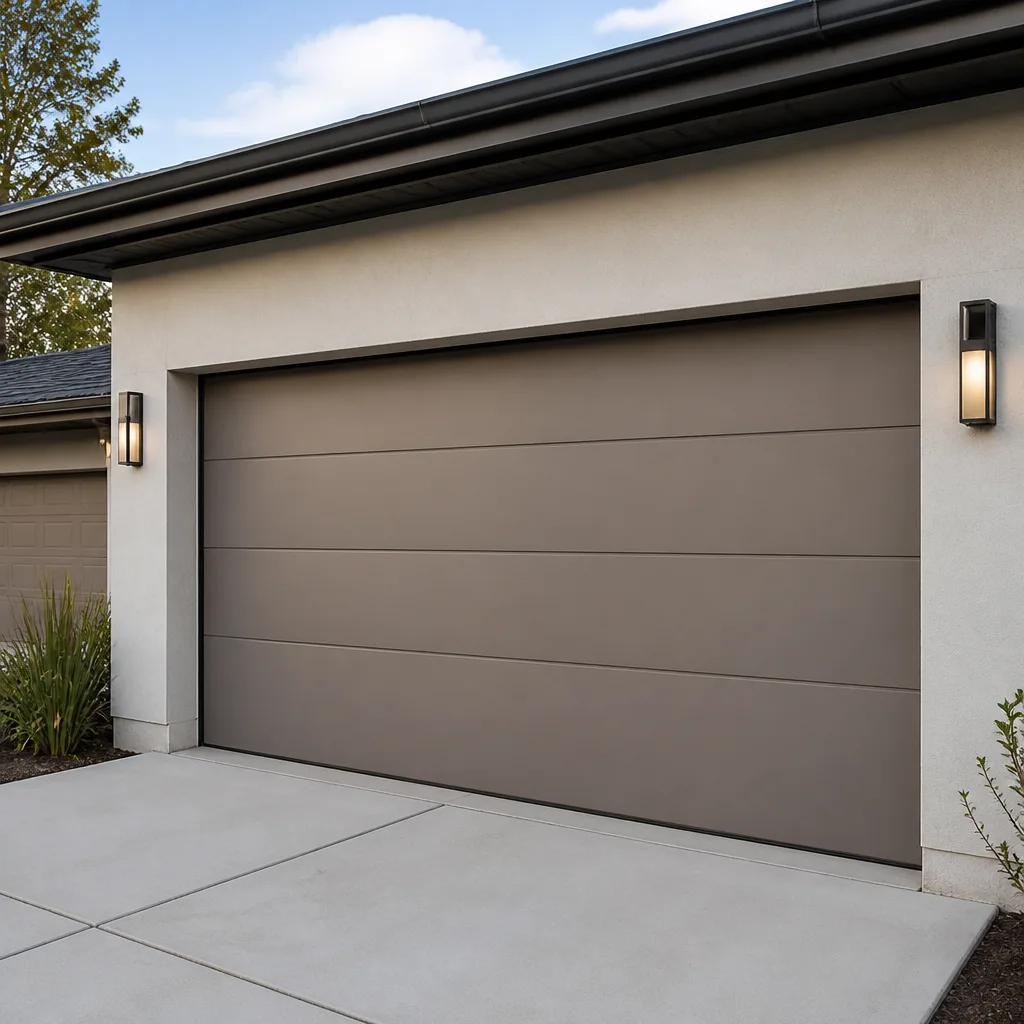 Modern flush
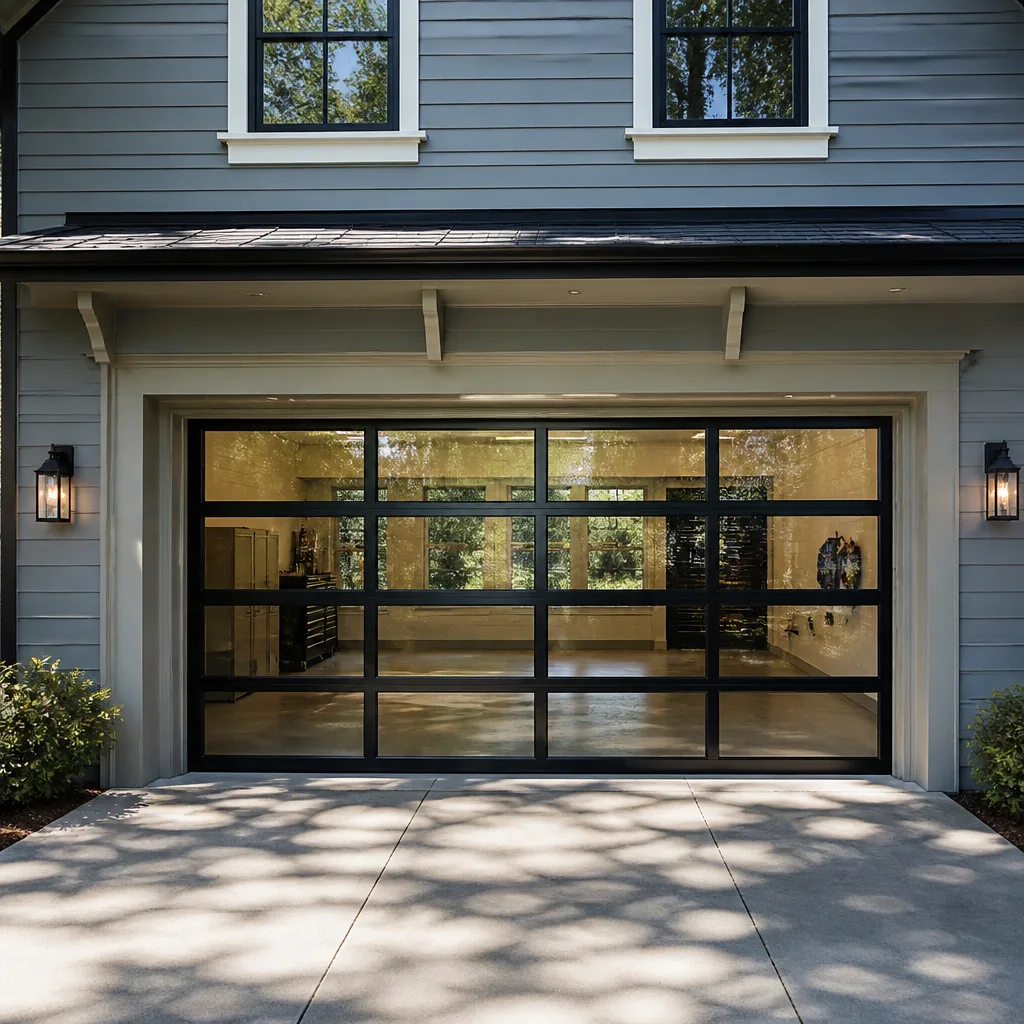 Full-view glass
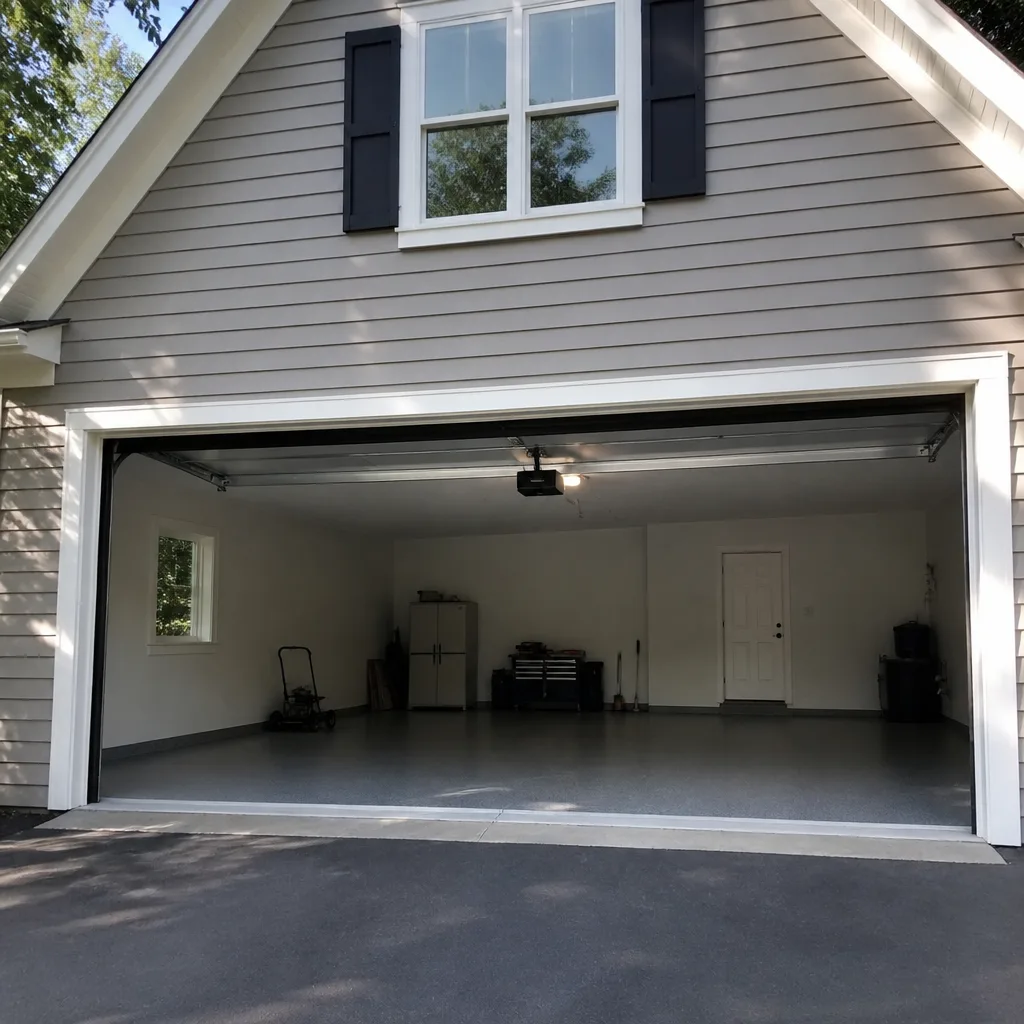 LiftMaster openers
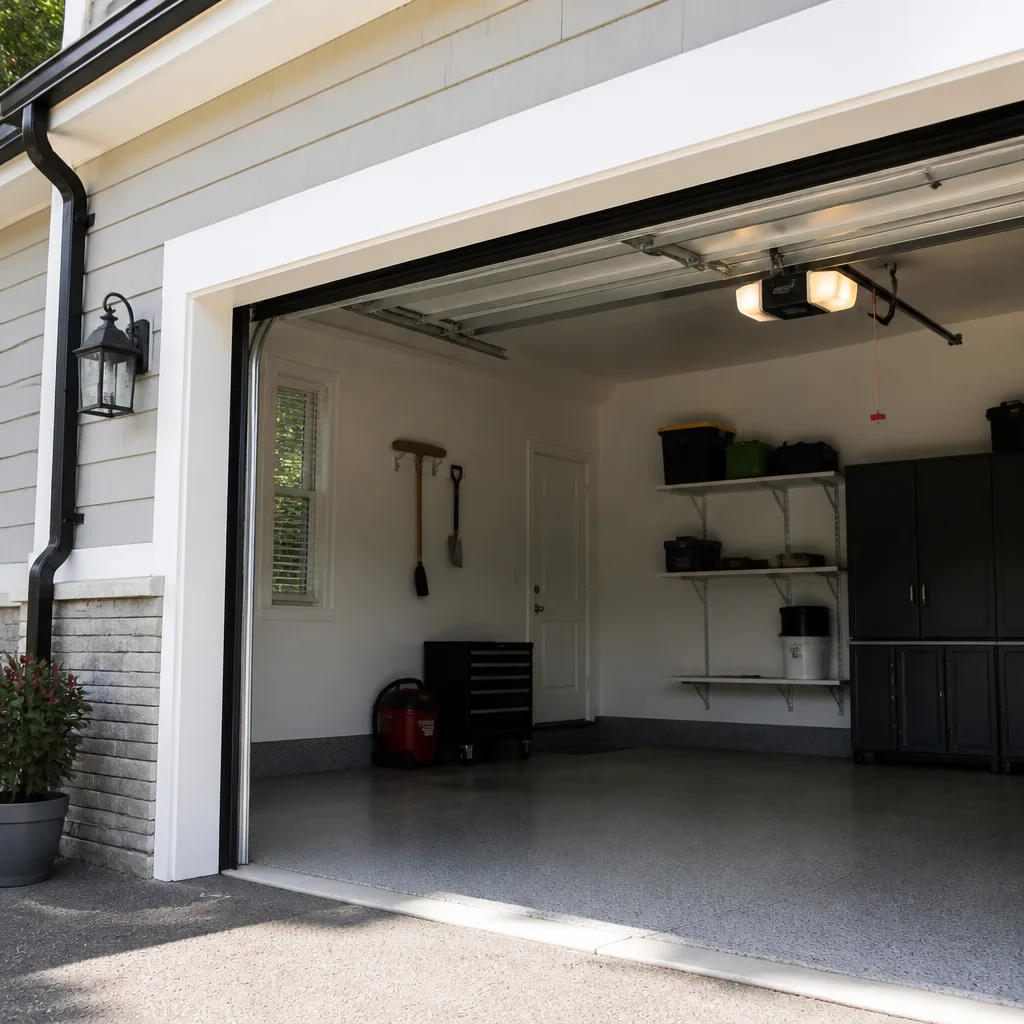 Chamberlain openers
Full 25-point door and opener safety check with every visit - springs, cables, rollers, tracks, and your LiftMaster or Chamberlain opener included
You get a price before we start. It does not change when the pro arrives.
Get your free estimateDIY vs Professional Garage Door: The Highlands Ranch Homeowner’s Decision Guide
Most homeowners assume the DIY vs professional question comes down to skill. It doesn’t. Garage door work splits cleanly into two categories: tasks where inexperience costs you time and money, and tasks where inexperience can cost you a hand. A torsion spring under load stores enough energy that a slip during replacement sends hardware flying with no warning and no second chance to correct. Watching a tutorial doesn’t change that math. This guide draws the line task by task, so you know exactly what’s safe to handle in your Highlands Ranch garage and what should go to a technician.
Quick Answer
Safe DIY garage door work includes weatherseal replacement, lubrication, safety sensor alignment, remote and keypad programming, and visual inspections. Torsion springs, extension springs, cables, bottom brackets, and any work that requires the door to come off its tracks are professional-only because the stored energy and tension can cause serious injury. Highlands Ranch homeowners can also safely replace batteries, tighten loose hardware, and clear obstructions, but anything involving the lift mechanism itself should go to a trained technician.
Styles & brands we work with
- Raised-panel steel
- Carriage house
- Modern flush
- Full-view glass
- LiftMaster openers
- Chamberlain openers
Table of Contents
- Why Garage Door Work Is Different From Other DIY
- A Task-by-Task Breakdown: What You Can Do vs. What You Can’t
- Douglas County Code and Permit Rules for Garage Door Work
- The Real Cost Comparison: DIY vs Professional
- How Opener Brand Complexity Changes the DIY Calculus
- What We Find When We’re Called In After a DIY Attempt
- Highlands Ranch Climate and the Wear Points It Creates
- Common Mistakes to Avoid
- When to Call a Professional
Why Garage Door Work Is Different From Other DIY
Every other home repair category has a forgiving failure mode. A bad paint job costs you a weekend. A loose faucet costs you a towel. Garage door work has one component – the spring – where the failure mode is a broken wrist, a cracked rib, or worse. That single fact reshapes the entire DIY question. It isn’t about whether you’re handy. It’s about whether a task has a bad-day outcome you can walk away from.
Torsion springs sit above the door on a metal shaft and twist to counterbalance the door’s weight. Extension springs run along the horizontal tracks and stretch to do the same job. When either is under tension – which is any time the door is down – it holds stored energy. During replacement, some of that energy is released to a person standing directly beneath or beside it. A crossbow comparison gets used because it’s accurate: the energy per inch of spring is comparable. That energy doesn’t care how carefully you watched the video.
What that means for your decision
- Repairs at floor level with no stored tension (weatherseal, sensors, lubrication) are genuinely low-risk and worth doing yourself.
- Repairs that release tension (springs, cables, bottom brackets) are the category a homeowner should never touch, regardless of confidence.
- Repairs that require removing the door from its tracks combine weight and spring tension, which is a third category of danger.
Our technicians have up to 9 years of experience, and the calls we get after DIY attempts almost always start at category two or three. In our experience, homeowners who respect that line save money; the ones who don’t tend to spend more than they would have on a professional job. The rest of this guide fills in each category, Highland Ranch specifics included, so the decision is clearer when the time comes.
A Task-by-Task Breakdown: What You Can Do vs. What You Can’t
The clearest way to sort this out is one repair at a time. Tasks marked safe are ones where the worst case is a wasted afternoon and a trip to the hardware store. Tasks marked professional-only are ones where the worst case involves an injury or a door that comes down uncontrolled. Highlands Ranch homes use the same door systems as the rest of the Front Range, so the list holds across neighborhoods like Northridge, Westridge, and Falcon Hills.
Safe to do yourself
- Weatherseal replacement. The rubber strip along the bottom of the door pulls out of its channel and slides back in. No tension involved, and a fresh seal stops the draft and dust that come with Highlands Ranch’s wind.
- Lubrication. A dry silicone or lithium spray on hinges, rollers, and the torsion shaft where it meets the bearing plates quiets a squeaky door and reduces wear. Never use grease on the tracks.
- Safety sensor alignment. The two sensors at the bottom of the tracks should point at each other. If the door reverses on its own or won’t close, one has been bumped out of line – straighten it and re-test.
- Remote and keypad programming. Whether you own a LiftMaster, Chamberlain, Genie, or Raynor, the programming steps are printed in the manual and on the opener head. It’s a button sequence, not a repair.
- Tightening loose hardware. Bolts and lag screws work loose over seasons. Snug them with a socket, but don’t over-tighten.
- Visual inspection. Look at cables for fraying, check the door’s balance by hand, listen for new sounds. Catching a problem early is the most valuable thing you can do in your garage.
Professional-only – do not attempt
- Torsion spring replacement. The spring is under full tension any time the door is down. Releasing and re-tensioning it correctly requires winding bars, the right technique, and the ability to recognize when a spring is about to fail.
- Extension spring replacement. Same stored-energy problem, different geometry, plus the safety cable running through the spring must be re-routed correctly.
- Cable replacement. Cables hold the door’s weight against the springs and are under continuous tension. A cable that snaps or slips free during handling whips with real force.
- Bottom bracket work. The bracket at the bottom corner of the door anchors the cable. Removing it while the door is under tension is one of the most dangerous jobs in the trade.
- Off-track correction on a heavy door. A door that has popped a roller can usually be re-seated, but if the door is bowed or the panel is separating, it needs a technician. Panels can fall.
- Track replacement or realignment. Tracks need plumb and level alignment; a slight bend wears the rollers fast.
If a repair is on the second list, the right move is a call, not a video. For anything on that side of the line, start with garage door repair rather than a parts run.
Douglas County Code and Permit Rules for Garage Door Work
Highlands Ranch is largely unincorporated Douglas County, so building department questions usually route to the county rather than a city office. For most repairs – a spring, a cable, a sensor – no permit is involved, because you’re restoring a working system, not altering the structure. For a new door installation or a significant structural change, the county may require a permit and an inspection. The safest move is a call to the Douglas County building department before you start, because rules on garage door replacement vary and a door that fails inspection is a door you have to redo.
Where permits typically come up
- Full door replacement. Swapping one manufacturer’s door for another’s often requires a permit, because the new door’s weight and header connection are different.
- Structural changes to the opening. Widening or raising the opening, or changing the header, is a structural change and needs a permit.
- Opener replacement. In most cases no permit is needed, but the electrical connection must meet code. A hardwired opener that’s being changed out is worth a quick call to confirm.
We don’t issue permits and we don’t speak for the county. What we can tell you is that when a job does need one, a professional installation is simpler because the installer knows the inspection sequence and the paperwork. If you’re installing a new door and want a straight answer on what’s involved, the team handling garage door installation in Highlands Ranch can walk you through it. The written estimate sets the price, and the scope of the job is agreed before work begins.
The Real Cost Comparison: DIY vs Professional
The parts price on a DIY repair is not the real cost, and that’s where most comparisons go wrong. A spring you buy online is the smallest number in the calculation. Add tool rental if you don’t own winding bars, add the parts mistake when the first spring is the wrong size, add the redo labor if the door ends up unbalanced, and add the time – and the honest comparison starts to favor a professional for anything beyond the easiest jobs. Highlands Ranch homeowners who do the math carefully tend to land in the same place: DIY wins on weatherseal, lubrication, and sensor work; professional wins on anything with springs or cables.
Where the costs land
- DIY low-risk work: parts cost only, usually a morning or afternoon of time, no injury risk. Clear win.
- DIY spring job: parts, plus winding bars if you buy them, plus the risk that the size is wrong and the whole job repeats, plus a real injury risk. Rarely a win even when it goes smoothly.
- Professional repair: one estimate, one visit for most repairs, a written price before work starts, and a system that’s correctly tensioned and safe when the technician leaves.
How a professional estimate works
- We ask what the door is doing and whether the spring, cable, or opener is the suspect.
- We give a written estimate before work starts. The number on that estimate is the price – no surprises on the invoice.
- We complete the repair and walk through what was done.
If you’re weighing repair vs replacement, the honest rule of thumb is this: repair is almost always the right first call, and only when a door is genuinely beyond saving should replacement come up. Repair first, replace only when it makes sense.
How Opener Brand Complexity Changes the DIY Calculus
Opener work sorts itself the same way as door work, only more so. Simple stuff – programming a remote, connecting the opener to Wi-Fi, resetting a tripped breaker – is genuinely DIY-friendly. The moment a repair requires opening the housing or replacing the logic board, the calculus changes. Live wiring runs through an opener, and a mistake doesn’t just cost a board, it can cost a shock. Repairing an opener is a different job from replacing one, and the “swap it and buy a new one” instinct is often the wrong call.
Why brand matters more than you’d think
A LiftMaster opener and a legacy Sears/Craftsman opener are not the same system inside. Programming a LiftMaster remote is a specific button sequence; pairing a Chamberlain unit with a smart home system follows a different interface path; a Genie unit integrates differently again. Add an older Raynor door with a legacy opener to the mix and the manual you need may be long gone. Familiarity with the brand is the difference between a technician who recognizes your model on sight and one who’s going to guess. We work on what you already have – LiftMaster, Chamberlain, Genie, Raynor, and the other widely installed brands – so there’s no pressure to switch teams.
When the opener is worth diagnosing instead of replacing
- The door works by hand but not by remote: often a logic board or receiver issue, not a dead motor.
- The door reverses for no visible reason: usually a sensor or limit setting, not a worn unit.
- The opener grinds but the door doesn’t move: often a gear or chain problem, fixable without a full replacement.
- The opener is a smart unit and the integration stopped working: often a firmware or pairing issue, not a hardware failure.
For any of these, the right first step is diagnosis, not a new opener. If you’ve reached that point, our garage door opener repair service exists specifically for this scenario – repair the opener rather than treat it as a commodity swap.
What We Find When We’re Called In After a DIY Attempt
The pattern is consistent. A homeowner replaces a spring with the right idea and the wrong size, and by the time the door goes up it’s unbalanced and the opener is overworking. Or the winding bars weren’t set deep enough, and the spring releases early. Or the door works, but a limit switch on the opener was set too far and the door hits the header every cycle. In almost every case the follow-up call is more expensive than an original professional job would have been, and it’s more expensive because there’s now a second problem layered on the first one.
The most common compounding mistakes
- Wrong spring size. Springs are specified by wire gauge, inside diameter, and length. A mismatched spring makes the door heavy or light, and both overwork the opener.
- Springs replaced without balancing. A door that isn’t balanced will burn through openers. The spring pair has to be wound correctly to counterbalance the door’s weight.
- Cables re-routed but not tensioned correctly. The door drifts to one side and starts to bind in the tracks.
- Opener force limits turned up. To make a heavy door move, a homeowner will raise the force setting. That’s the opener warning you it’s losing the fight. Turning it up invites the door to crush whatever’s in its path.
- Safety sensors left out of line or taped over. The reversing mechanism exists for a reason. Taping the sensors disables a safety feature and turns a minor repair into an unsafe door.
When we’re called in on one of these, we spend extra time un-doing the second problem before we fix the first. That’s the honest cost of a DIY attempt that didn’t land. For a Highlands Ranch homeowner looking at a system that’s stacked up like this, a single technician visit through Highlands Ranch service is the cleanest reset. One call covers the whole system.
Highlands Ranch Climate and the Wear Points It Creates
Highlands Ranch sits high enough that the temperature swings are wide – warm afternoons and cold nights, with a shoulder season that brings the thunderstorm and hail pattern of the Front Range. That swing is hard on a garage door. The metal expands and contracts, the spring steel fatigues faster, and the rubber weatherseal at the bottom dries out and cracks. The wind that comes off the foothills pushes dust and grit into the tracks and into the rollers. None of that is dramatic; it’s just wear, and it shows up on a different schedule than it would on the coast or in a mild climate.
Where we see the wear first
- Weatherseal at the bottom of the door. UV and dry air break down the rubber. Check it each fall; replacement is a straightforward DIY job.
- Rollers and hinges. Grit off the wind works into the moving parts. Lubrication twice a year keeps them running quietly.
- Springs. Wide temperature swings accelerate fatigue. Springs fail eventually; the question is when, not if.
- Opener gear and chain. A door that’s out of balance wears the opener faster, and out-of-balance is common after a repair was done without re-tuning the door’s tension.
These are the same wear points a technician looks at during an inspection. Highlands Ranch homes that are checked each season usually avoid the surprise-failure scenario, and a five-minute visual inspection tells you most of what you need to know. The trick is knowing which wear points are worth fixing yourself and which are worth a call. The task-by-task list above is the short version.
Common Mistakes to Avoid
- Replacing a spring without matching the size. Pull the old spring and match the wire gauge, inside diameter, and length exactly, or let a technician size it. A mismatched spring makes the door heavy or light and overworks the opener.
- Turning up the opener’s force limit to force a heavy door. That setting exists to protect people and objects. Raising it hides a problem instead of fixing it.
- Taping over safety sensors because the door won’t close. The reversing system is a safety feature. If it’s tripping, find out why – usually the sensors are out of alignment.
- Winding a torsion spring without the right bars. Using a screwdriver or a short bar invites the bar to slip and the spring to release. This is the single most dangerous DIY mistake in the trade.
- Removing a bottom bracket on a tensioned door. The bracket holds the cable. Removing it while the door is under tension can release the cable violently.
- Greasing the tracks. Grease attracts grit and turns the tracks into a paste. Lubricate hinges and rollers, not the track itself.
- Ignoring a door that reverses on its own. That’s a sensor or limit issue that gets worse, not a quirk to live with. A door that reverses mid-travel is telling you it’s about to fail.
When to Call a Professional
Call a technician when the repair is on the professional-only list – springs, cables, bottom brackets, off-track correction on a heavy or bowed door – or when the door has developed a problem you can’t reproduce reliably. Call when you’ve replaced something and the door still isn’t balanced, or when the opener is running but the door isn’t. Call when a door reverses on its own after you’ve straightened the sensors and tested them twice. Call when the door is old enough that a repair might turn into a decision about replacement. And call before you start a spring job, not after.
Banner Garage Door Repair offers free estimates in Highlands Ranch. Call (844) 761-2567. We answer 24/7. Fast dispatch from 7am to 7pm, Sunday through Friday.
See the difference
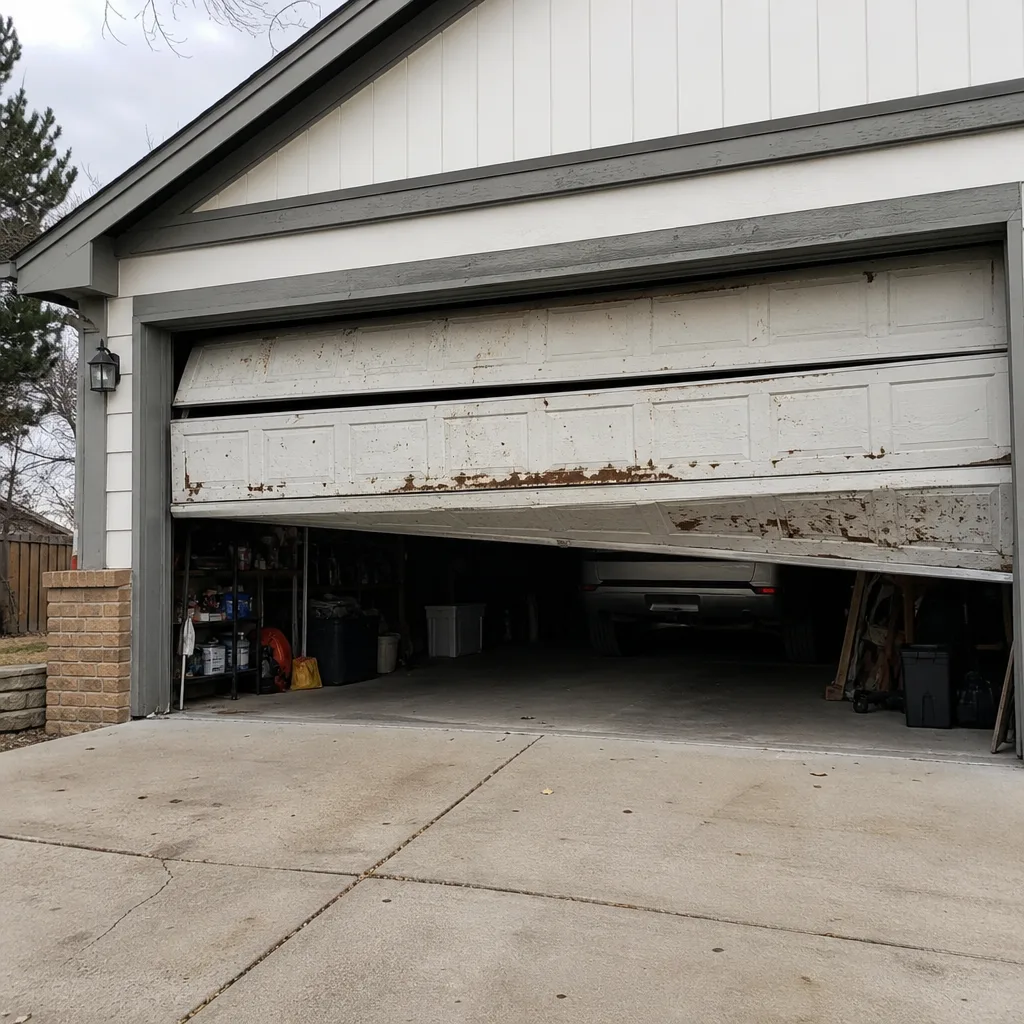 Before
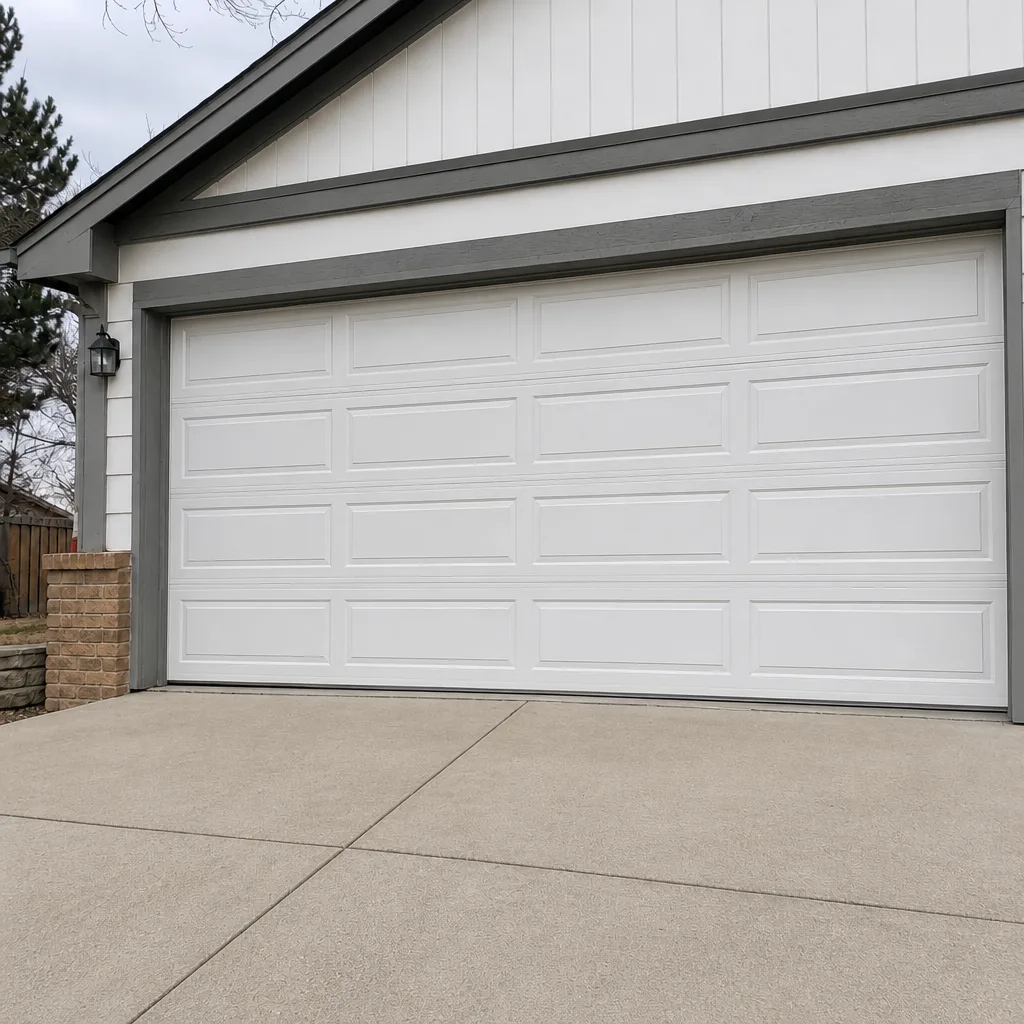 After
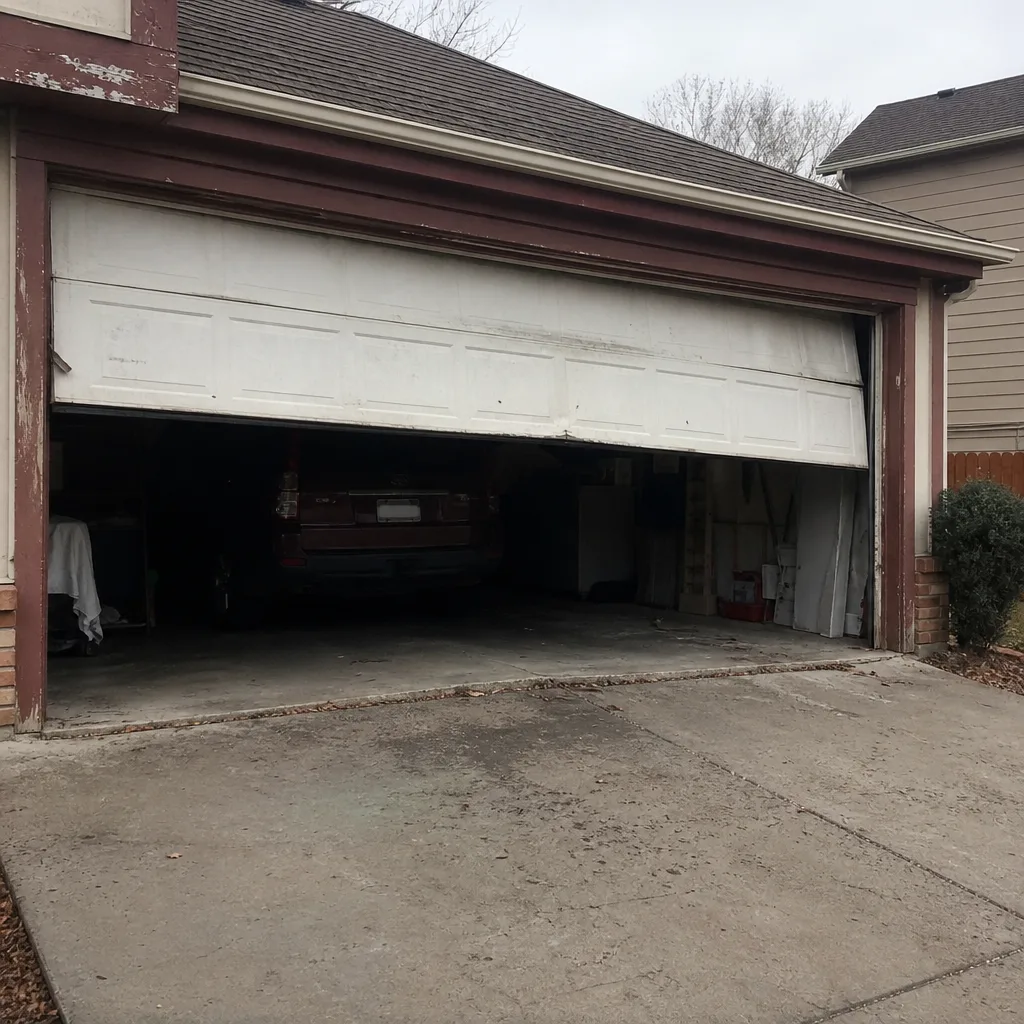 Before
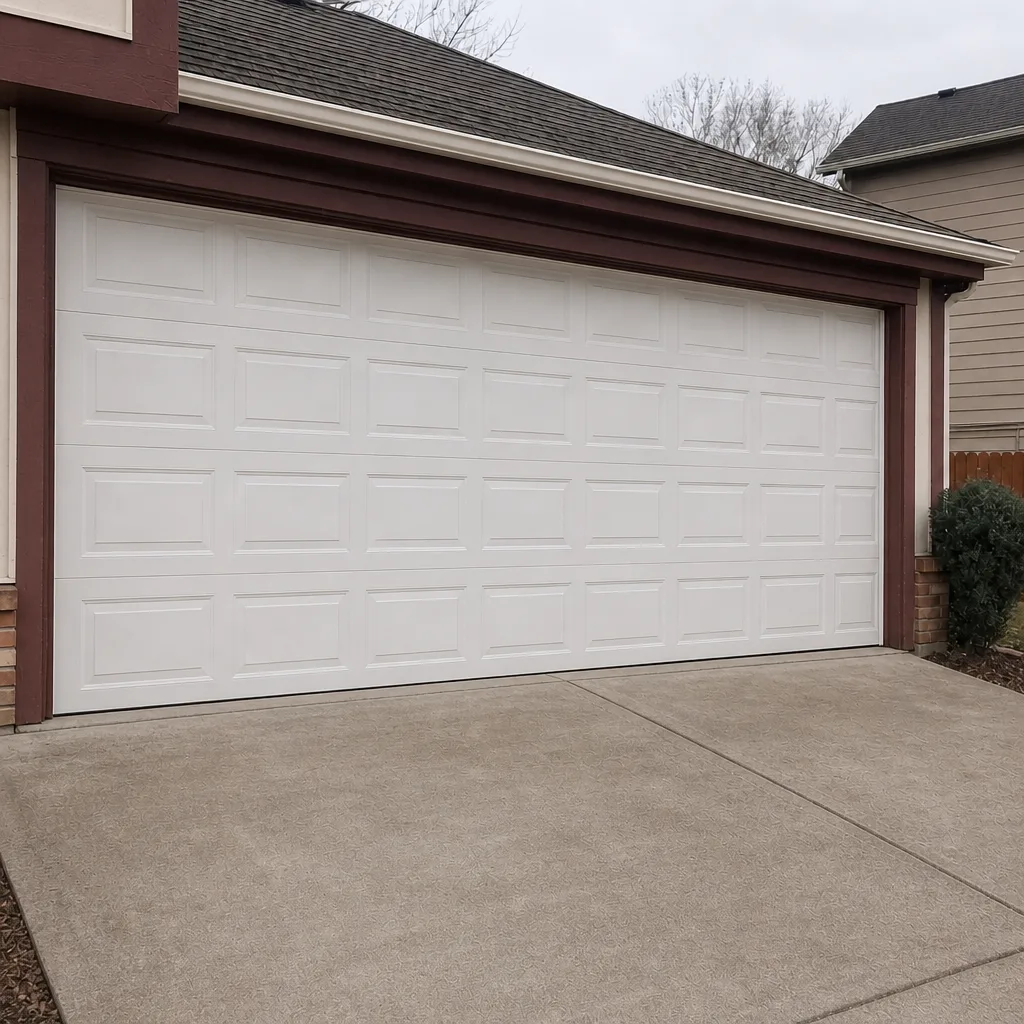 After
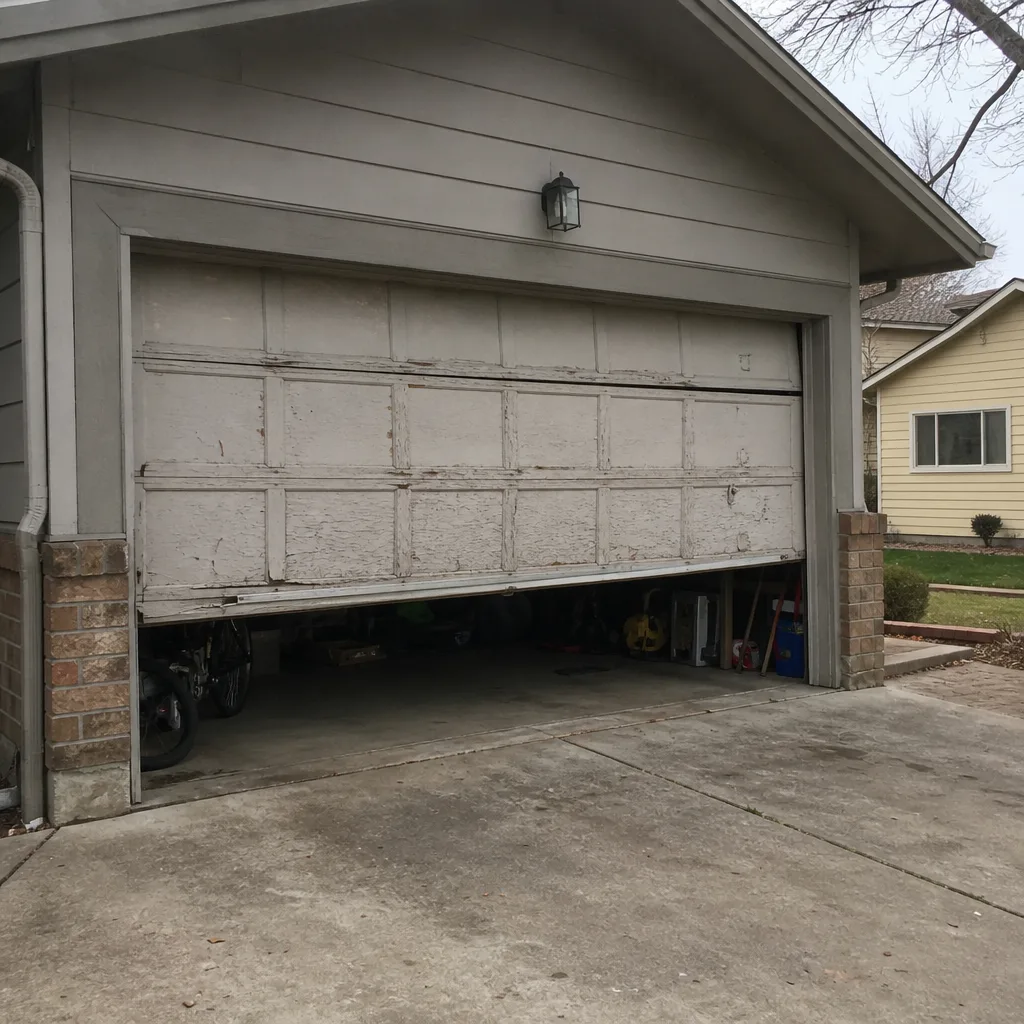 Before
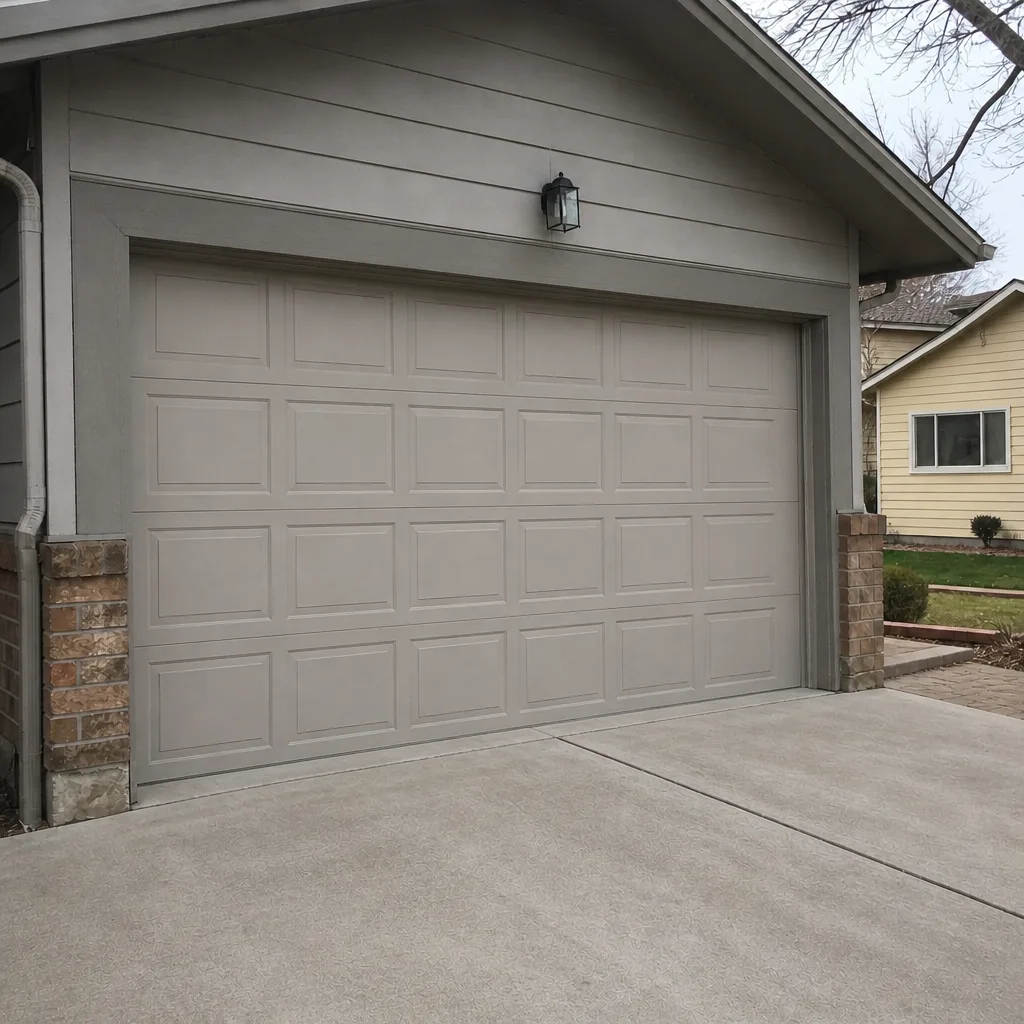 After
Frequently Asked Questions
You should not replace a torsion spring yourself. The stored energy in a spring under tension can cause serious injury if it releases unexpectedly, and releasing or re-tensioning it correctly requires winding bars and a careful release technique. Call (844) 761-2567 for an exact quote – estimates are free.
Pricing depends on the repair, the parts involved, and whether the door is a single- or double-width system. We give a written estimate before work starts, and the price on that estimate is the price. Call (844) 761-2567 for an exact quote – estimates are free.
Weatherseal replacement, lubrication of hinges and rollers, safety sensor alignment, remote and keypad programming, and visual inspections are safe DIY tasks. Anything that involves a spring, a cable, or the bottom bracket is professional-only. A good rule is that if the task requires releasing tension, it’s a call.
Permit requirements vary, so ask the Douglas County building department before you start. Full door replacement and any change to the opening are the cases most likely to need a permit and an inspection. A professional installation is usually simpler because the installer knows the inspection sequence.
It depends on what the mistake was – a wrong-size spring, a cable that slipped, a force limit turned up, or a door that’s out of balance. In many cases the correction costs more than an original professional job would have, because there’s now a second problem layered on the first. Call (844) 761-2567 for an exact quote – estimates are free.
Yes. The technicians we connect you with are licensed and insured, and they’re trained across the major opener and door brands – LiftMaster, Chamberlain, Genie, and Raynor among them. Call (844) 761-2567 for an exact quote – estimates are free.
No. The written estimate sets the price, and it’s agreed before any work starts. If the technician finds a second problem, they’ll walk you through what it is and give you a revised estimate to approve before proceeding. Nothing is done without your go-ahead.
The Bottom Line
Most garage door DIY questions come down to one line: does the task require releasing spring tension or removing the door from its tracks? If the answer is yes, it’s a professional job, and the reason is the failure mode, not the skill involved. If the answer is no – weatherseal, lubrication, sensors, programming – go ahead and handle it in your Highlands Ranch garage. The rest of the decision is cost, and the honest cost comparison includes tool rental, redo labor, and the cost of fixing a mistake. When the task lands on the professional side, one call covers the whole system. Our technicians have up to 9 years of experience with the door hardware and the opener, and we repair what’s there rather than pushing a replacement.
Need a hand with a repair you’d rather not attempt yourself? Call Banner Garage Door Repair at (844) 761-2567 for a free estimate. We answer 24/7. Fast dispatch from 7am to 7pm, Sunday through Friday. The estimate is free and the price is set per job by the written estimate, so you know what you’re paying before anything starts.
Written by the team at Banner Garage Door Repair.