
Last updated November 15, 2026
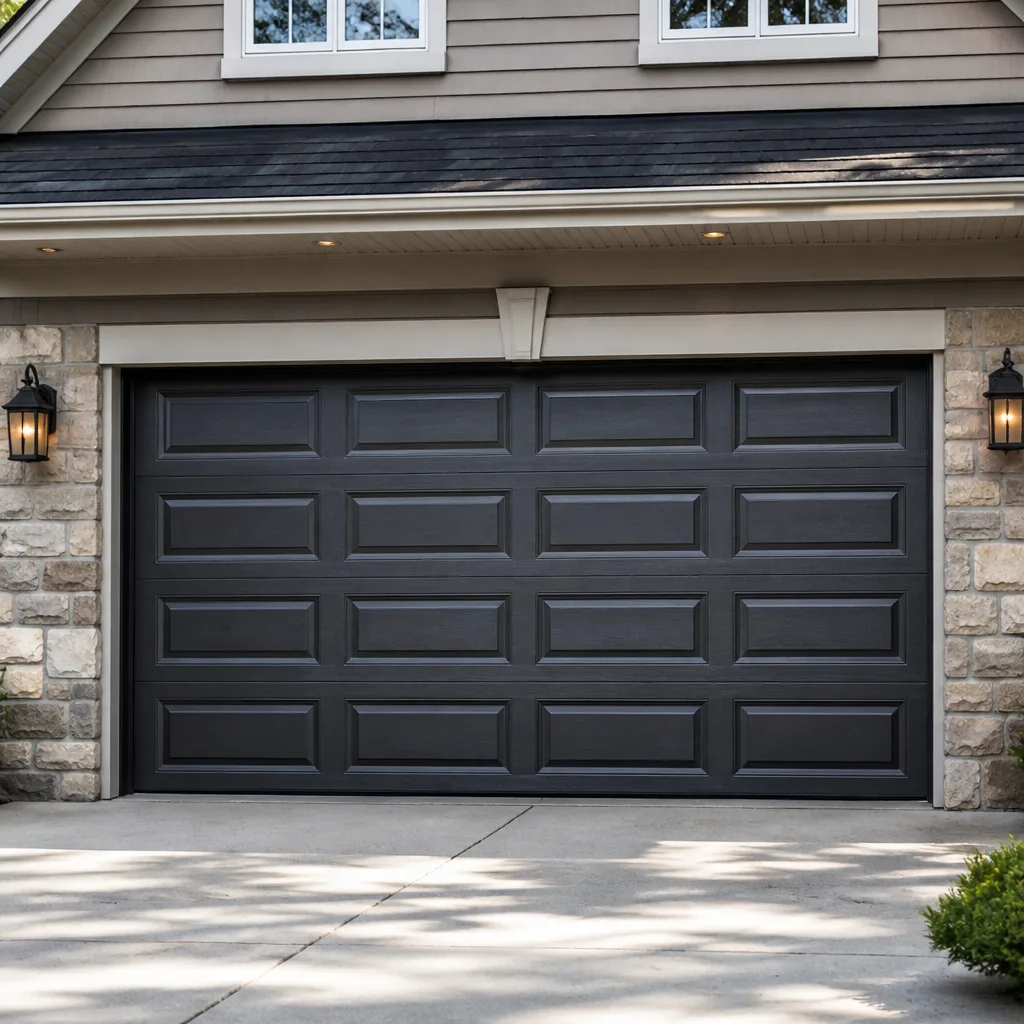 Raised-panel steel
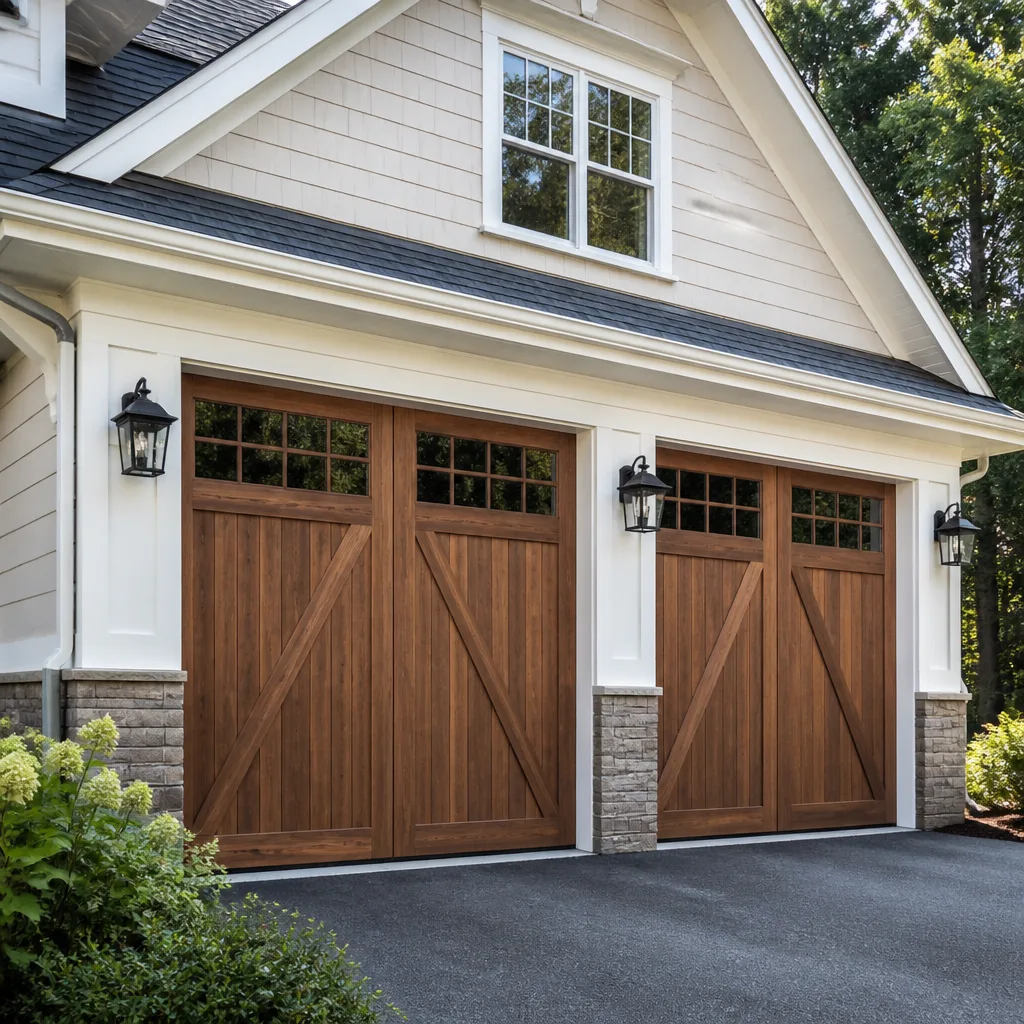 Carriage house
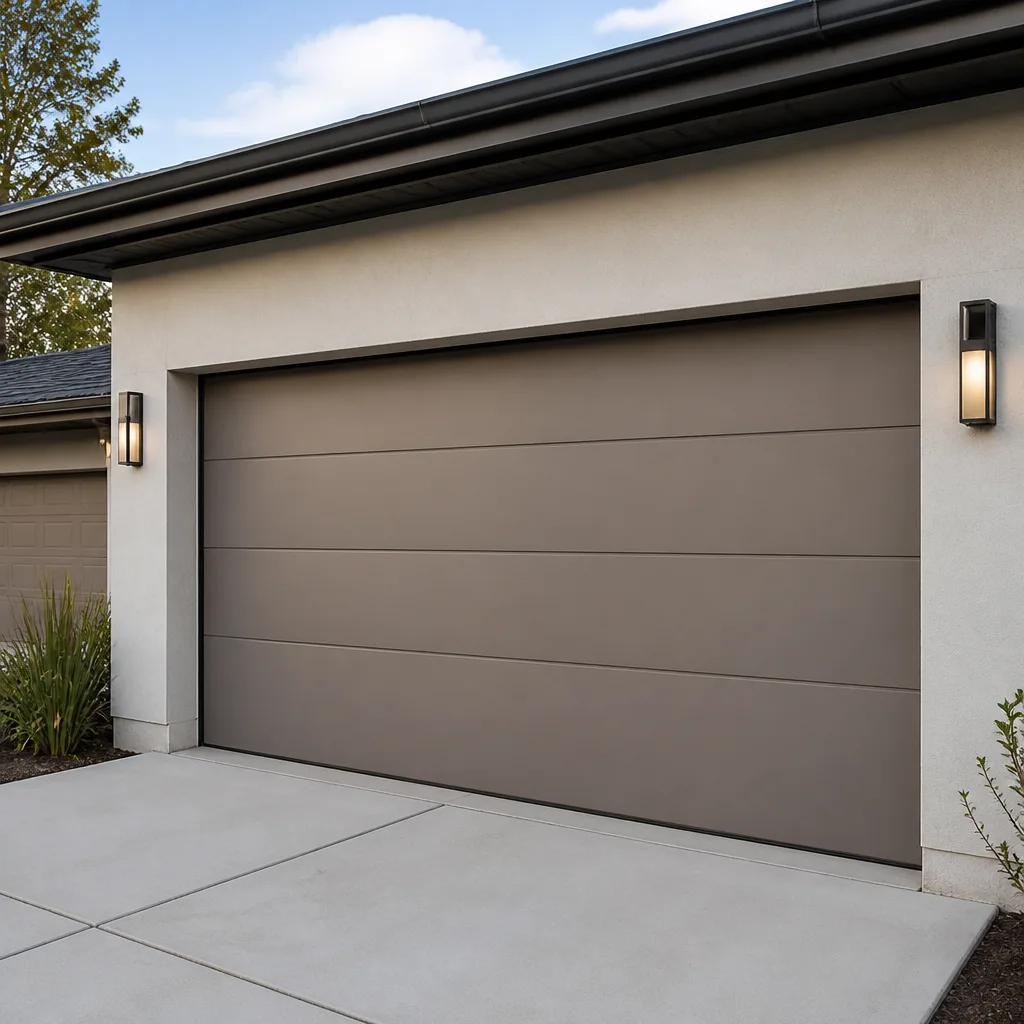 Modern flush
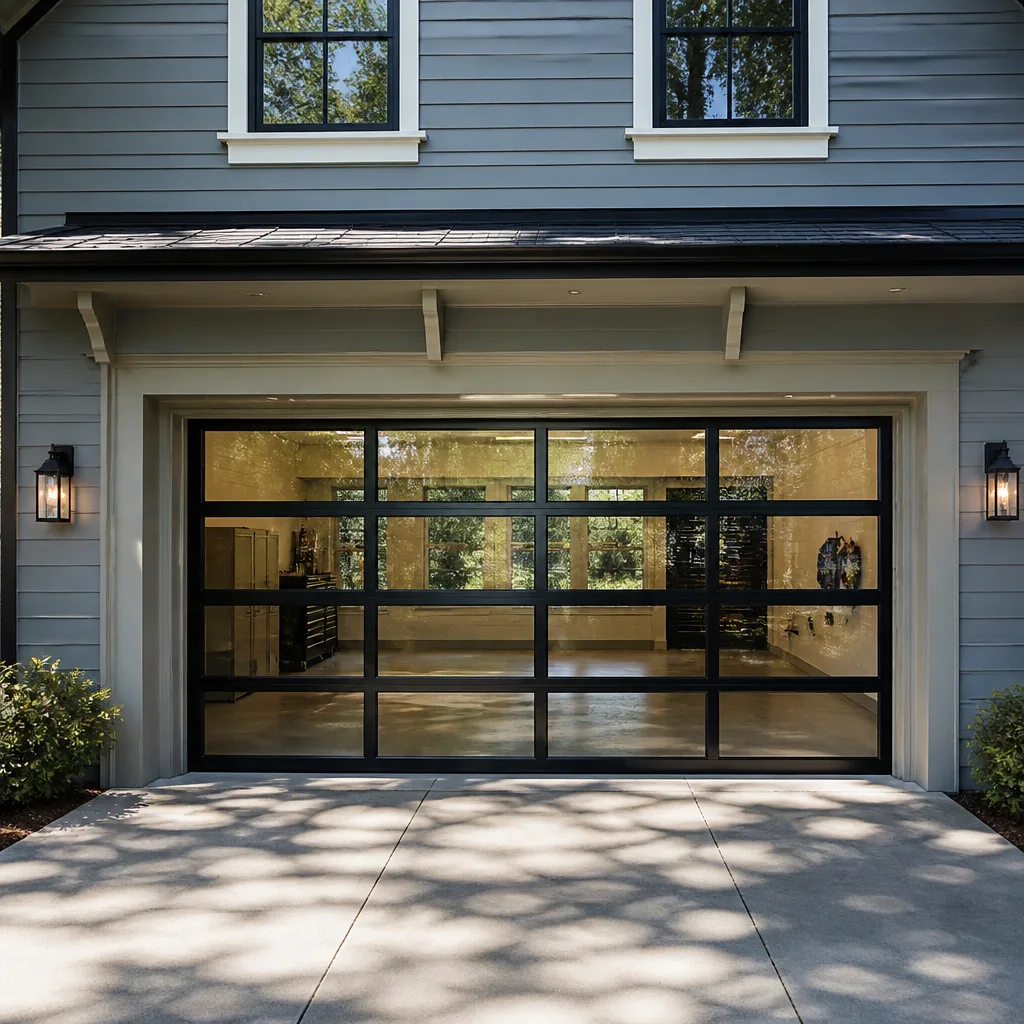 Full-view glass
 LiftMaster openers
 Chamberlain openers
Full 25-point door and opener safety check with every visit - springs, cables, rollers, tracks, and your LiftMaster or Chamberlain opener included
You get a price before we start. It does not change when the pro arrives.
Get your free estimateGarage Door Warning Signs: A Highlands Ranch Homeowner’s Reference Guide
The most expensive garage door repairs rarely come from a sudden breakdown. They come from a symptom that was misread. A grinding noise and a door that moves slowly sound like cousins in a description, but they come from completely different failure chains, and treating them the same is how homeowners end up paying for repairs they didn’t need while the real problem keeps getting worse. The reversing door you saw this morning probably doesn’t have a bad opener at all. This guide maps the eight complaints we hear most often in Highlands Ranch to the parts that actually cause them, shows you how to tell opener problems from mechanical ones without touching anything risky, and helps you separate the warnings that can wait from the ones that can’t.
Quick Answer
Garage door warning signs fall into two groups: urgent and watchful. A broken torsion spring, a cable off its drum, or damage to the bottom panel needs professional attention before the door is used again. Grinding, uneven travel, a slow door, or a remote that only works up close usually points to rollers, track alignment, or opener settings and can wait for a scheduled visit – as long as you stop cycling the door while you wait. Matching the symptom to the right failure chain is what keeps both your door and your budget intact in Highlands Ranch.
Styles & brands we work with
- Raised-panel steel
- Carriage house
- Modern flush
- Full-view glass
- LiftMaster openers
- Chamberlain openers
Table of Contents
- The Symptom-to-Cause Matrix: Eight Complaints, Eight Fixes
- Opener Problem or Door Problem? How to Tell Without Touching Anything Dangerous
- Urgent vs. Watchful: Which Warnings Can Wait for a Scheduled Visit
- Panel Integrity by Material: Steel, Faux Wood, and Composite
- Cold Weather and the Symptoms It Amplifies
- Reversal, Sensors, and Close-Force: The Five-Minute Fix Homeowners Miss
- Brand Matters: Why Diagnosis Should Fit the Door, Not the Truck
- A Monthly Walk-Around You Can Do in Ten Minutes
The Symptom-to-Cause Matrix: Eight Complaints, Eight Fixes
Here’s the core of this reference guide. When you can describe your door’s behavior precisely, a technician arrives knowing what to test first instead of starting from zero. That’s how a visit stays short and a bill stays honest. Most of what you’ll hear from a failing door falls into eight categories:
- Grinding or scraping. Metal-on-metal sound usually traces to worn rollers or a dry hinge, occasionally a bent track section. The door may have run this way for months. It’s not urgent, but it accelerates wear on every part it touches.
- A loud bang, then silence. That’s the classic sound of a torsion spring letting go. The door will not stay up on its own afterward. This is urgent – stop using the door now.
- Uneven travel or a crooked door. One side rises before the other, or the door sits visibly cocked in the frame. Cables and springs are the usual suspects, sometimes a slipping cable on a drum. Urgent if the door looks tilted – a falling panel is a real hazard.
- A slow door. The opener is running at a reduced speed or stalling under load. Could be opener-side (motor, capacitor, limit settings) or door-side (frozen roller, tight track, weakened spring). Distinguishing these two takes measurement, not guesswork.
- Reversing before it hits the floor. Almost never a broken opener. Usually a misaligned safety sensor or an out-of-spec close-force setting. See the reversal section below.
- A remote that only works up close. Batteries first. Then antenna, then a failing opener receiver board. Often the cheapest fix on the list.
- Visible sag in the top or bottom panel. The panel has lost structural integrity, often from a mis-timed close against an obstruction or long-term spring imbalance. Urgent if the sag crosses a hinge line.
- Daylight around the edges. Seal gaps, not a failure – usually the bottom weatherstrip has compressed or the door is out of square in the frame. Not dangerous, but it lets in Highlands Ranch’s winter drafts and dry-season dust.
Notice how differently these eight behave. A grinding door and a slow door are two distinct failure chains with two distinct costs. Treating them identically is how homeowners get sold a full opener replacement for what was actually a set of worn rollers. When you’re ready to have the door looked at, our garage door repair covers the door mechanism itself – panels, springs, rollers, and track – as one job.
Opener Problem or Door Problem? How to Tell Without Touching Anything Dangerous
Half of what homeowners call opener failures are actually door problems the opener is faithfully trying to lift. The opener is the brain and motor, and it can only do so much when a door resists. A spring that has lost tension or a track that’s pinched tells the opener “more load,” and a good opener answers by working harder. The motor gets blamed. The door was the culprit all along.
You can narrow this down without getting near the springs or cables, which are genuinely dangerous to touch – stored energy in a tensioned torsion spring can release without warning and has hurt people. Leave those to a trained technician. What you can safely do is listen, observe, and note:
- Manual disconnect test. Pull the red release handle (with the door in the closed position and no one under it) and try lifting the door by hand. If it moves smoothly with light effort, the door and springs are probably fine and the opener is the suspect. If it feels heavy, saggy, or resists in one section, the door mechanics need attention.
- Sound location. A grinding noise from the door itself is door-side. A clicking noise from the head unit mounted to the ceiling is opener-side.
- Does the light blink but nothing move? Opener is getting the command but isn’t lifting. Check the safety sensors first (see below), then suspect the opener.
- Does the door move a few inches and stop? The opener sees resistance. Could be safety setting, could be a binding door. Check for obstruction first, then stop cycling it.
- Does the door move only when you hold the wall button down? Classic safety-sensor issue. The sensors think something is in the way.
This is where garage door opener repair starts to matter – but the honest version, where we confirm the door climbs freely before we touch the opener. The opener is a system component, not a commodity swap. If the door itself is the load problem, no opener replacement fixes it.
Urgent vs. Watchful: Which Warnings Can Wait for a Scheduled Visit
Not every warning sign deserves a same-day call. Knowing which ones do is one of the most useful things this guide can give you – it’s the difference between a rational service decision and a panic purchase. Use this split:
Urgent (stop using the door, call now):
- Broken torsion spring. The loud bang followed by a dead door. The door becomes unmanageable by hand, and forcing it strains cables and panels.
- Cable off the drum, or visibly slack/frayed. Cables are under heavy tension, and a snapped cable is a real injury risk. Don’t touch it.
- Bottom section damage (crushed corner, split panel, hinge torn). The bottom section carries structural load; a compromised section can fail while someone walks under it.
- Door hanging crooked or visibly off one track. This can drop.
- Opener runs but the door won’t move at all, and burning smell is present from the head unit. Stop, unplug, and call.
Watchful (schedule a visit, but stop the automatic cycles):
- Grinding, squealing, or rumbling during travel.
- Door runs slower than usual but completes a cycle.
- Remote inconsistency from a distance.
- Seal gaps, drafts, or daylight around the edges.
- Cracked or faded paint on panels with no structural damage.
The “watchful” list can usually wait for a scheduled visit, but it shouldn’t wait indefinitely. Every automatic cycle on a struggling door puts more load on the opener. If you can lift the door by hand safely, use manual operation only until we’re out. In Highlands Ranch, a lot of these watchful items turn into urgent ones after the first hard freeze if they were already marginal.
Panel Integrity by Material: Steel, Faux Wood, and Composite
Your door’s panels take the visible beating – hail, sun, wind-driven debris, and the structural stress of daily cycles. What “warning sign” means on a panel depends on what the panel is made of. Highlands Ranch homes run mostly three materials: steel, faux wood (steel stamping or aluminum with a wood-grain finish), and composite, with some true wood on older homes.
Steel panels. The workhorse. Warning signs: dents that break the paint barrier (those will rust from the inside out in Colorado’s dry-then-wet cycles), hinge-line crimps after a collision, and any dent that crosses into a hinge mount. A shallow dent is cosmetic. A dent at a hinge or roller bracket is structural. Check the interior face too – rust streaks on the inside of a steel door usually means moisture is getting behind the finish, often from a worn bottom seal.
Faux wood and wood-grain steel. These use a finish layer that can delaminate. Walk around the outside and look for peeling at panel edges and along the bottom rail. Once the finish lifts, moisture gets behind it and the substrate corrodes or swells. That peeling strip you barely notice at eye level on a Clopay or Amarr wood-grain door is exactly what to point out to a technician. Cosmetic now, panel replacement later if ignored.
Composite. Uncommon but present. The material doesn’t rust, but it does craze (fine surface cracking from temperature cycling) and can develop hairline checks near fasteners. Crazing is cosmetic. Checks that reach a fastener are a whole-panel concern. Composite doors also tend to go out of square from settlement more than steel, so a panel that “looks a little short” at one corner deserves a look.
Whatever the material, the test that matters most is structural, not cosmetic: run your hand along each hinge line and check for gaps, cracks, or movement in the panel there. Hardware at a hinge takes load. A panel making those checks is worth keeping. If it fails, a Banner Garage Door Repair team can tell you whether a section swap or a full door makes more sense. We work on what you already have, including Wayne Dalton and Amarr panels, before we suggest replacement.
Cold Weather and the Symptoms It Amplifies
Highlands Ranch sits at elevation above the Denver metro, which means colder nights, sharper temperature swings, and freeze-thaw cycles that stress every part of a door. Cold doesn’t usually create new problems. It amplifies the ones already there. That’s why a symptom you barely noticed in October can become loud in January. Watching for that shift tells you whether the problem is temperature-related or structural.
Temperature-related symptoms tend to appear with the first cold snap and fade when the weather moderates:
- Rollers running rough or noisy for a few days at first frost, then smoothing out.
- A door that moves slower on the coldest mornings.
- Weatherstrip stiffening and letting in a little draft at the sides.
- A slight creak at hinges that quiets once the door has run a few times.
Structural symptoms stay the same regardless of temperature, or get worse:
- Spring or cable issues that don’t improve after ten cycles.
- Mid-travel binding or hesitation.
- A door that sits visibly crooked in the frame.
- Panel damage or a bottom seal that physically doesn’t touch the floor.
Here’s a practical rule: if a symptom appears only in the cold and disappears by afternoon, watch it but don’t panic. If it persists over a week or gets worse as the season deepens, it’s structural. These cold-weather amplifications also explain why the same door that felt fine in fall suddenly sounds awful in a deep-freeze week – the sound you’re hearing is the accumulated wear catching up. When the door starts to feel genuinely heavy by hand or the door runs a cycle that doesn’t complete, that’s your signal to schedule – not because the cold broke something, but because it revealed something that was already marginal. If you’re new to the area and wondering how a dry-high-country door behaves, our Highlands Ranch page covers what to expect from the local climate year-round.
Reversal, Sensors, and Close-Force: The Five-Minute Fix Homeowners Miss
A garage door that reverses mid-descent is the single most common reason homeowners assume they need a new opener. Nine times out of ten, they don’t. The door is telling you that the safety sensor saw something, or the close-force setting is out of spec, or the sensor beams are misaligned. All three are usually resolved in minutes with the right instructions from the opener’s manual – not a new unit.
Before you panic, check these in order:
- Look at the two small sensor eyes on either side of the door opening. Are they lit? A solid light on both usually means aligned. A flickering or unlit sensor on one side means misalignment or a broken wire.
- Look for obstructions between them. A leaf, a cobweb, a settled yard tool, a sagging bottom seal – any of these triggers a reversal. So does a mist of dust on the lens.
- Check for direct sunlight. Colorado’s sun at low angles can “blind” one sensor and cause a phantom obstruction. If this happens at the same time of day, it’s the sun, not the door. A small shade or repositioning the sensor fixes it.
- Check the wall-mounted light for a diagnostic code. Most openers (LiftMaster, Chamberlain, Genie, Craftsman) have a code that tells you exactly what the unit thinks is wrong.
The close-force setting is the other half of the equation – it’s how hard the opener pushes when the beam isn’t interrupted. If a technician raised it during a prior repair to “get it to close,” it may now be too high, which is a genuine safety concern with a person in the path. This is worth adjusting professionally. It’s a setting, not a part swap.
Brand Matters: Why Diagnosis Should Fit the Door, Not the Truck
Garage door systems live in brand ecosystems. Openers from LiftMaster and Chamberlain share a lot of logic; Genie has its own force settings and diagnostic codes; Craftsman units carry manufacturer-specific quirks; doors from Clopay, Amarr, Wayne Dalton, and Raynor each have their own hinge mounts, panel profiles, and spring loads. A technician who only knows one ecosystem tends to solve everything with the parts they carry – which is how a straightforward sensor fix turns into an opener replacement.
A brand-agnostic diagnostic approach means testing the system on its own terms. That’s the standard we hold ourselves to at Banner Garage Door Repair. Our technicians have up to 9 years of experience and are trained across competing manufacturer ecosystems, so they read the door first and recommend based on what the door needs. Repair first, replace only when it makes sense. If you’d rather know which system you own before calling, the model plate on the head unit or the door label inside the panel tells you; if it’s not visible, we can identify it when we arrive. If you’re weighing whether to fix or replace, our garage door opener repair works as a gate – we diagnose, and we tell you honestly when a repair stops being worth it.
A Monthly Walk-Around You Can Do in Ten Minutes
Most of the signs in this guide become urgent only because nobody noticed the earlier version. A ten-minute check once a month catches nearly everything before it gets to the “stop using the door” stage. Here’s the routine we recommend to Highlands Ranch homeowners:
- Cycle the door once with the wall button. Stand to the side (never under a moving door) and watch and listen as it opens and closes. Note scraping, grinding, jumping, a stall, or a slide that doesn’t complete.
- Look up. Trained only on the top section, spring, and cables – no touching. Any visible sag, slack, or off-line cable stops the check here and becomes a call.
- Look down. Check the bottom seal: does it touch the floor all the way across? Any daylight? Any torn rubber?
- Check both safety sensors. Solid light on both? Clean lenses? Nothing between them?
- Protect the manual release. Red handle accessible and the release rope not caught on anything. Try the door by hand while disengaged, then re-engage.
- Test the remote from the end of the driveway. If it only works up close, that’s a “watchful” symptom.
- Check the internal panel faces at the hinge lines. Run a hand along each hinge, inside and out. Any cracks, gaps, or flex – note the location.
That’s it. Note anything odd in your phone. When you do call a technician, you’ll be able to tell them exactly what you saw and when – which is a technician’s most useful information.
Common Mistakes to Avoid
- Assuming a reversing door means a bad opener. Safety sensors, close-force settings, and sun hitting a sensor are the usual culprits. Replacing an opener for a sensor issue is the most expensive wrong call on this list.
- Cycling the door repeatedly after a loud bang from the spring area. A broken torsion spring leaves the door unmanageable by hand. Every cycle after it breaks strains cables and panels. Stop and call.
- Raising the close-force setting yourself to “get it to close.” This is a safety setting, and dialing it up because the door won’t seal leaves the door running on an unsafe force. The real fix is usually the sensor or the bottom seal.
- Touching the springs or cables. These are under stored energy that can release instantly. No honest technician will coach a homeowner through this. Leave it.
- Judging a panel by paint alone. A shallow dent is cosmetic, but a dent at a hinge or roller mount is structural. A Highlands Ranch hail-dented door can look fine from the street while the hinge line is splitting.
- Ignoring cold-weather changes. A symptom that appears only in a cold snap may be temperature-related. Ignoring a symptom that survives the cold snap is how an amplification becomes a failure.
- Buying a new opener without diagnosing the door. If the door itself is binding, no opener replacement fixes the problem. Fix the door first.
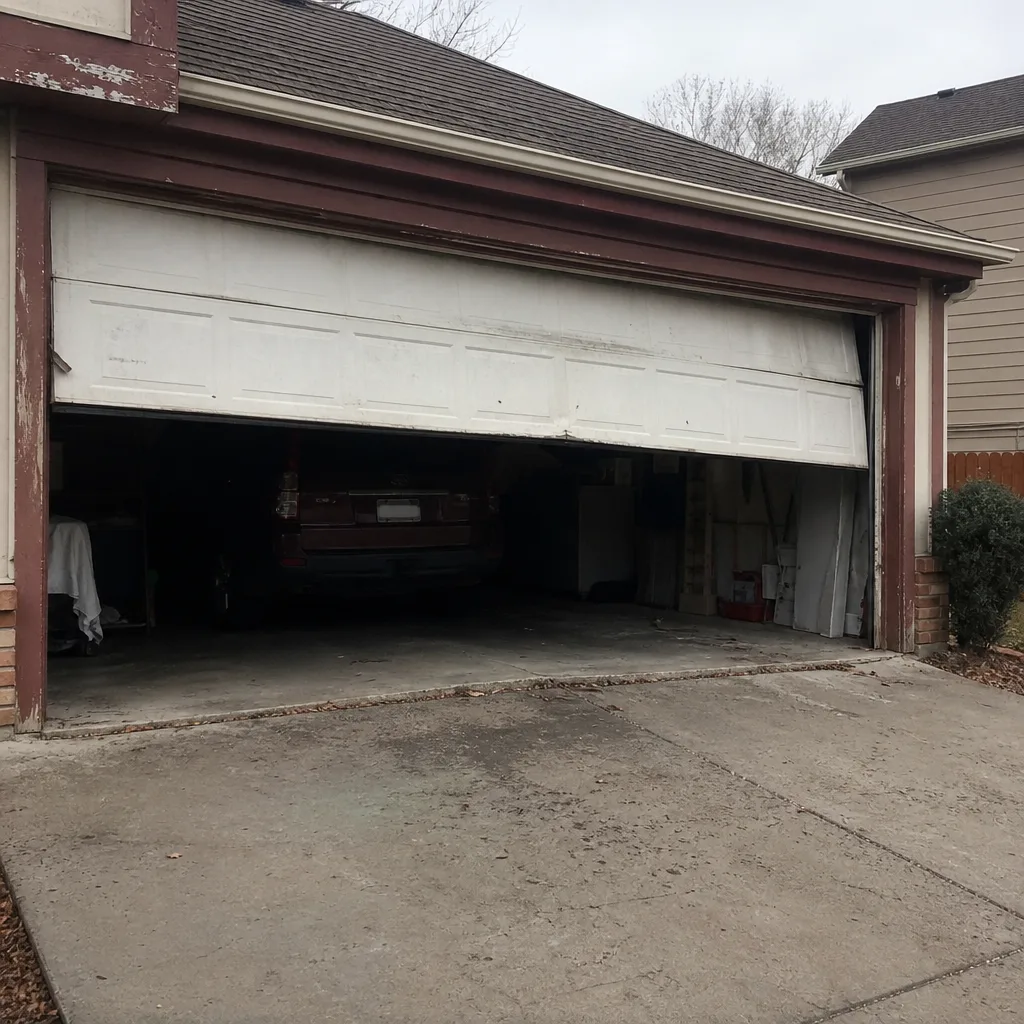
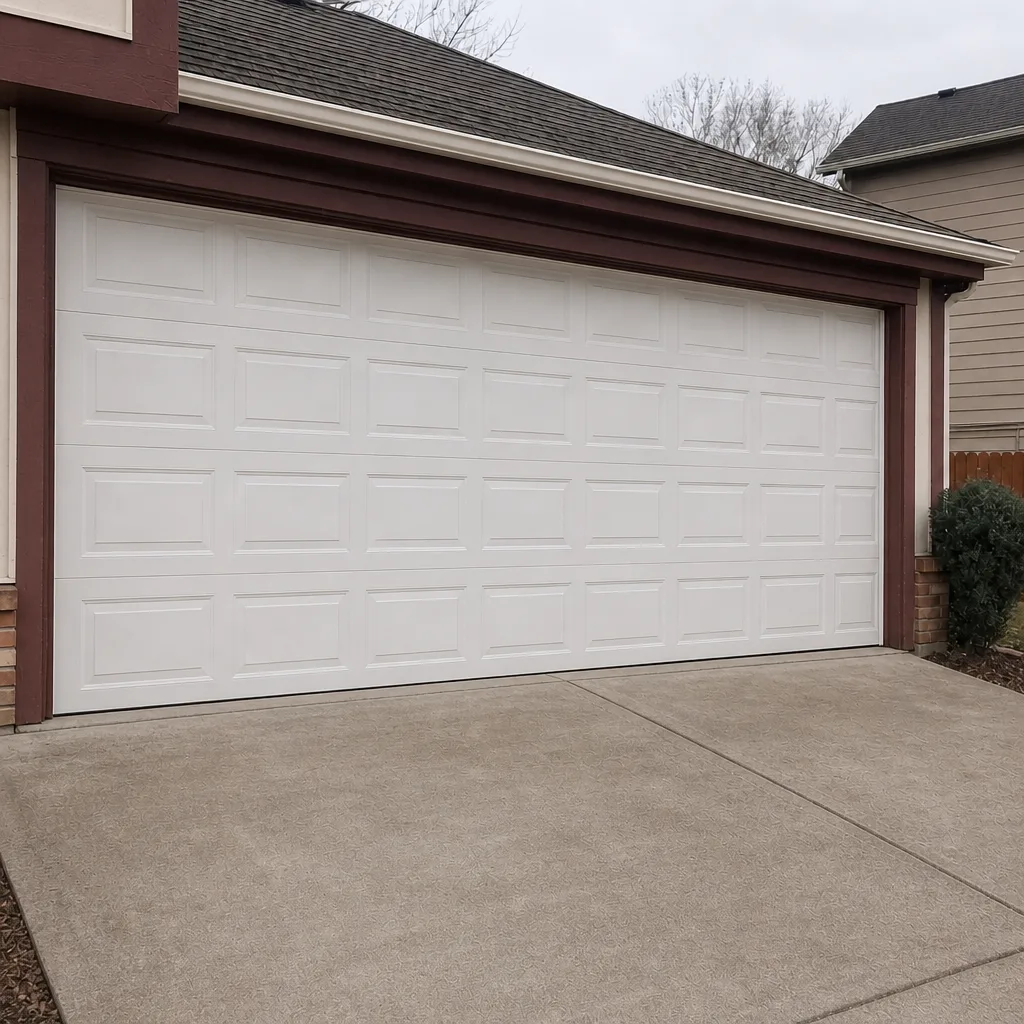
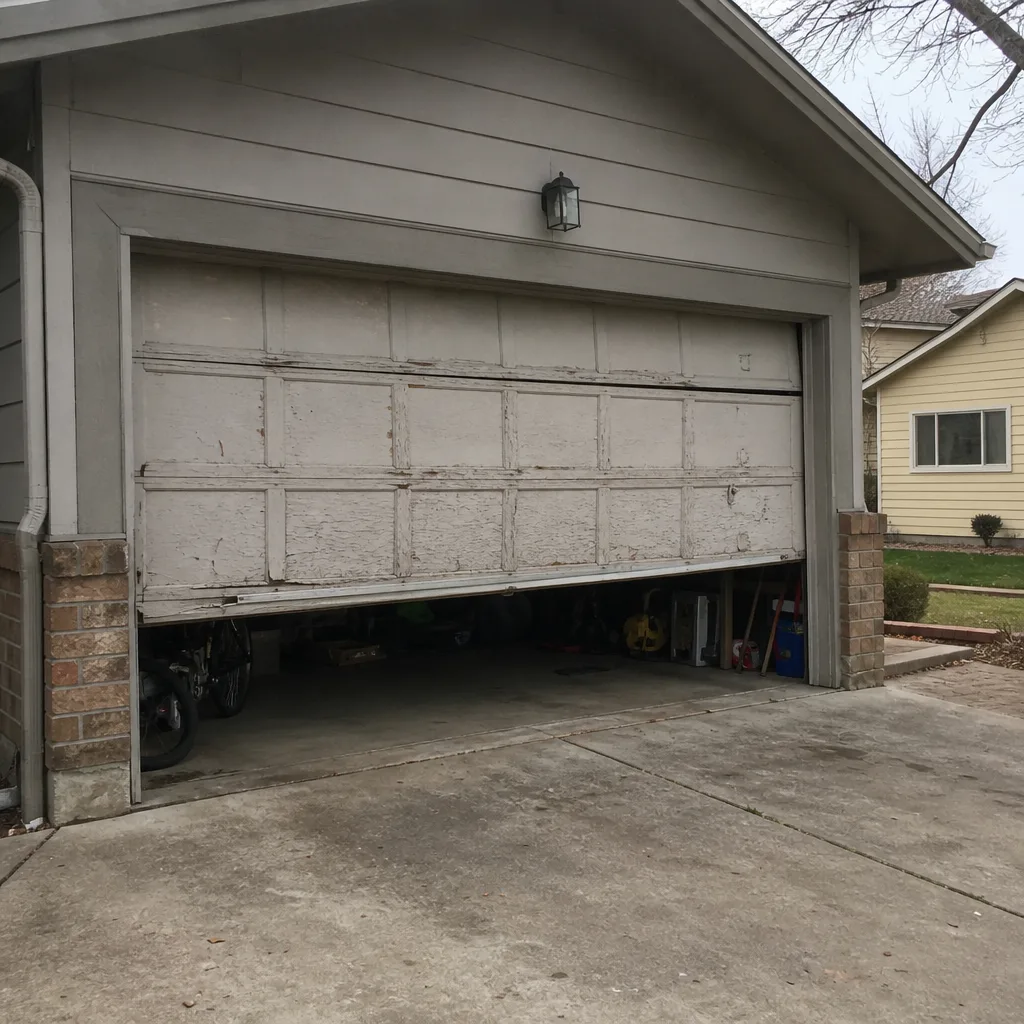
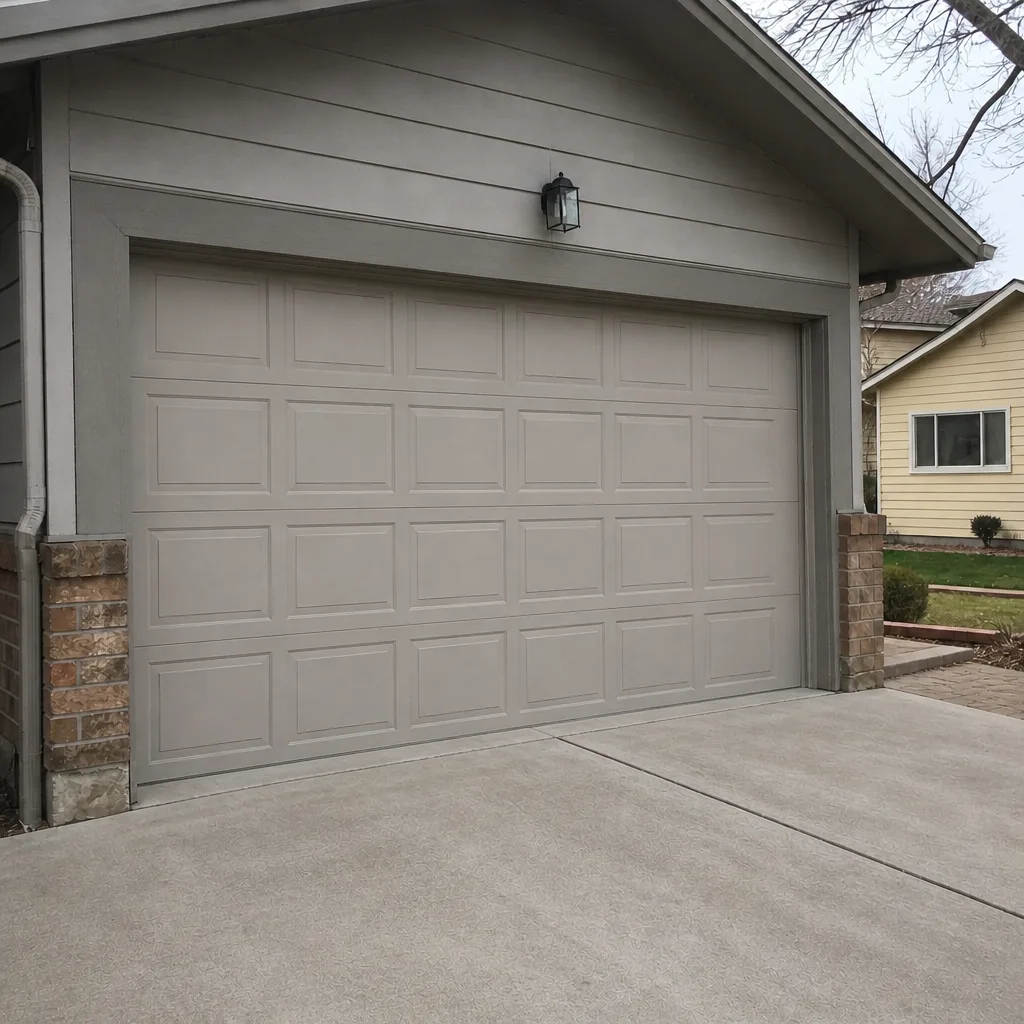
See the difference
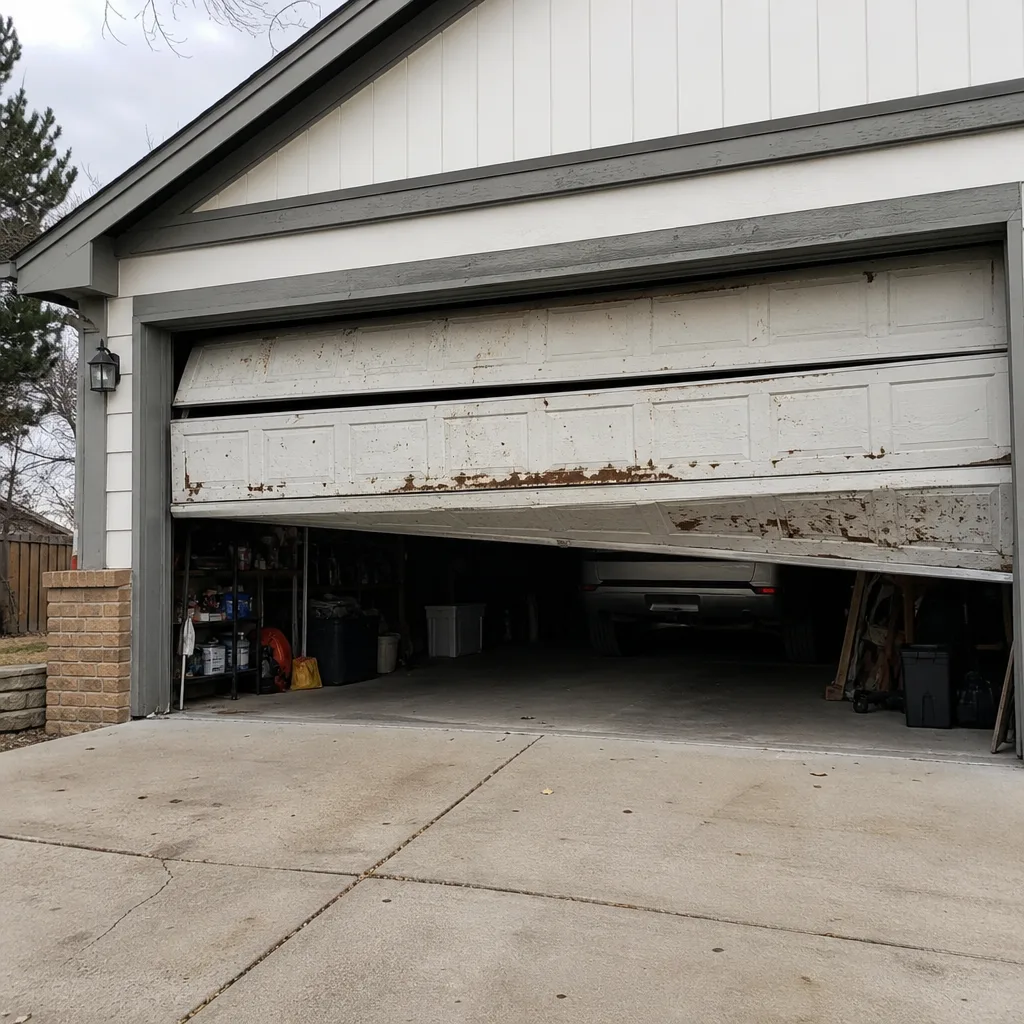 Before
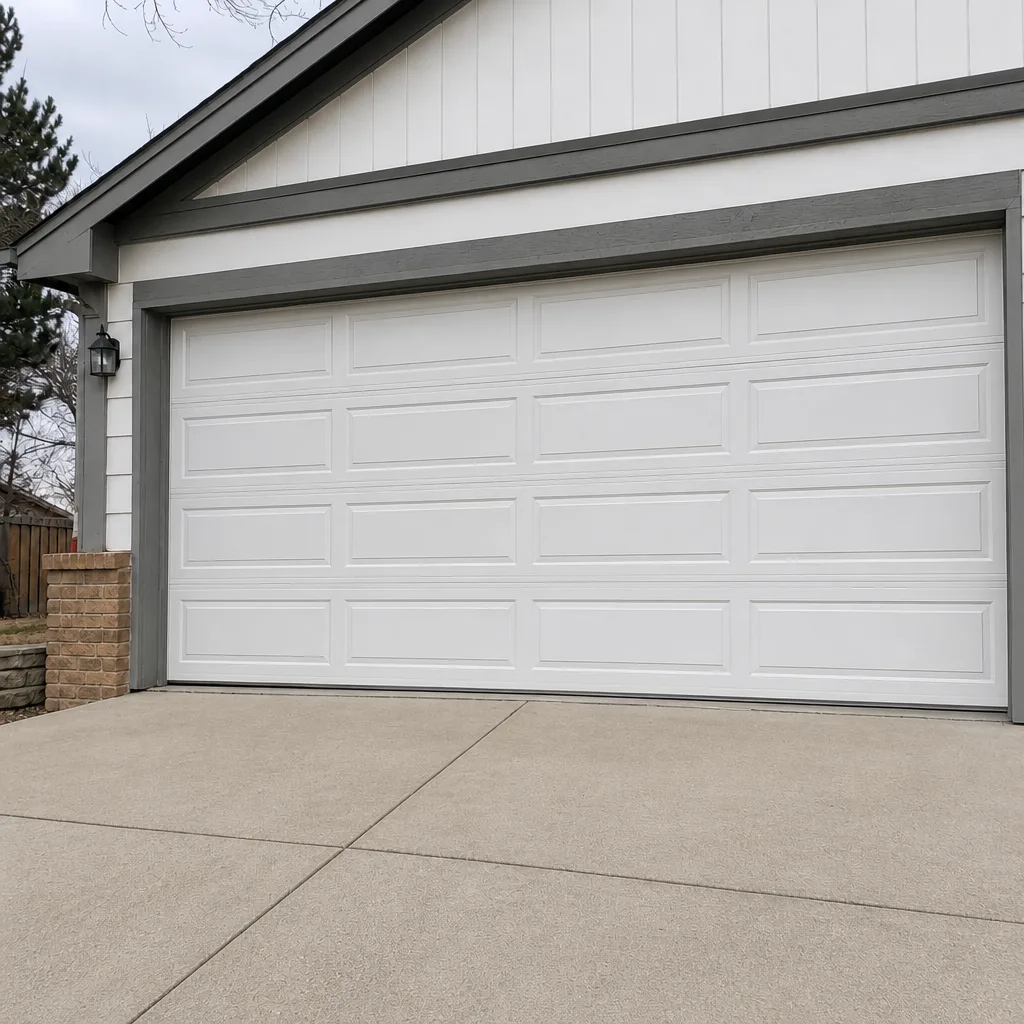 After
 Before
 After
 Before
 After
When to Call a Professional
Call a professional immediately for: a broken torsion spring, a cable off the drum or frayed, a visibly crooked or hanging door, bottom section damage, or a burning smell from the opener with no movement. Stop using the door and keep it closed until a technician arrives. For the watchful symptoms – grinding, slowing travel, remote inconsistency, seal gaps, minor panel damage – schedule a standard visit. That’s where careful diagnosis pays for itself: the technician reads the door, tests accurately, and quotes before any work begins. Banner Garage Door Repair offers free estimates in Highlands Ranch – call (844) 761-2567. We answer 24/7. Fast dispatch from 7am to 7pm, Sunday through Friday. The written estimate is the price you pay – no surprise on the invoice.
Frequently Asked Questions
Worn rollers and a failing bottom weatherstrip are the two most common issues we see in Highlands Ranch, and they often show up together. Worn rollers produce the grinding noise homeowners describe, and a stiff bottom seal lets cold air in during the sharp temperature swings above the metro. Both are watchful symptoms – schedule a visit, don’t panic. Call (844) 761-2567 for a free estimate and we’ll tell you which you’re dealing with before we come out.
Most reversing doors do not need a new opener. Check the two safety sensors first: if one is misaligned, dirty, or blinded by sun, the door is doing what it was designed to do. Adjust, clean, and try again. If the door still reverses and the sensors are solid, the close-force setting or a loose sensor wire is the next suspect. Call (844) 761-2567 – we can usually diagnose over the phone with a few details.
No. A grinding noise is almost always worn rollers, dry hinges, or a slightly bent track, and it can wait for a scheduled visit. It shouldn’t wait more than a couple of weeks, because the friction wears every part it touches. The one exception is a grinding noise combined with a substantial slowdown or a door that won’t complete a cycle – that combination needs a faster look. Call (844) 761-2567 for a free estimate.
No – the written price you agree to before any work begins is the price you pay. We diagnose, quote, and confirm before the first tool comes out. If diagnosis uncovers something the initial description didn’t capture, we stop and re-quote before continuing – never a surprise invoice at the end. Call (844) 761-2567 to schedule an estimate.
Yes. The professionals who work on your door are state-licensed and insured, and they’re trained across eight major brands – LiftMaster, Chamberlain, Genie, Clopay, Amarr, Wayne Dalton, Craftsman, and Raynor – so they recognize your system on sight. Our technicians have up to 9 years of experience, and the work is backed by a satisfaction guarantee. Call (844) 761-2567 to book.
Yes, for urgent issues like a broken spring, a cable off drum, or a door knocked off track. We answer 24/7 and dispatch Sunday through Friday, 7am to 7pm. We’re closed Saturday. If your symptom is watchful (grinding, slow travel, remote inconsistency), a scheduled visit is the right call and often cheaper. Call (844) 761-2567 and tell us what you’re seeing.
The Bottom Line
Warning signs on your garage door are information, not emergencies. A reversing door is almost always a sensor fix, a grinding door is almost always rollers and track, and a slow door can be either opener-side or door-side until someone measures it. The costly mistakes come from treating all three the same. Match the symptom to the failure chain, know which signs are urgent (broken spring, off-drum cable, crooked door, structural bottom-section damage) and which are watchful, and stop using the door the moment something looks genuinely dangerous. Run the ten-minute walk-around monthly. In Highlands Ranch, the cold snaps and hail will tell you honestly what’s already marginal. When it’s time, one call covers the whole system – door, opener, and install.
Written by the team at Banner Garage Door Repair.